
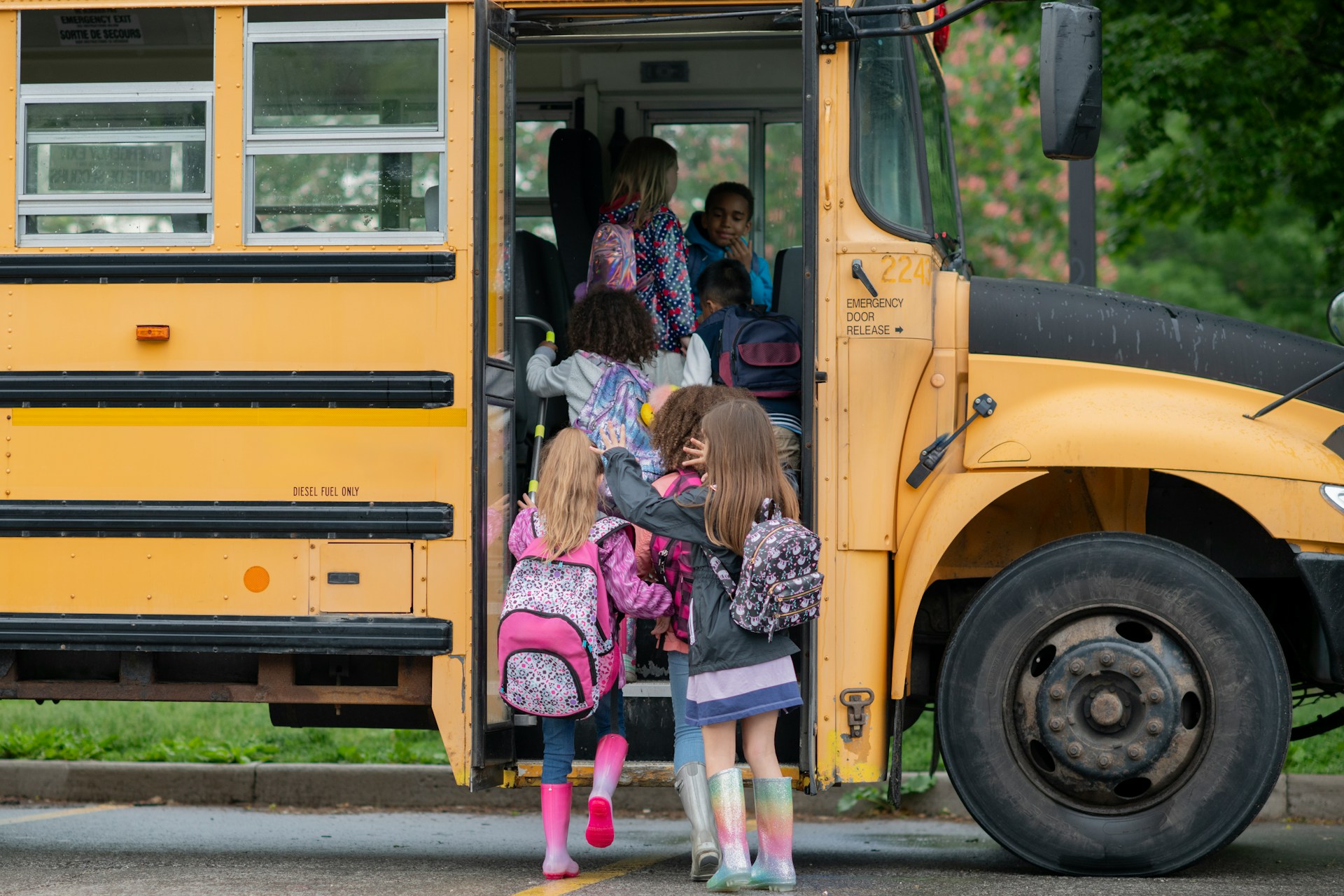
The return to school brings familiar changes to Calgary roads. Morning traffic becomes heavier, residential streets become busier, and thousands of children once again travel between home, school buses, sidewalks, and classrooms.
For drivers, the start of the school year is an important reminder to watch closely for school buses and the children travelling around them. Although school buses are designed with numerous safety features, children can be particularly vulnerable while boarding, exiting, or crossing a roadway near a stopped bus. Getting on or off a school bus is one of the circumstances in which school bus passengers are most likely to be injured.
When a motorist fails to stop for a school bus that is required to stop, the consequences can extend well beyond a traffic offence. A child who is struck may suffer serious or lasting injuries, raising questions about liability, insurance coverage, compensation, and the child’s future needs.
Understanding School Bus Lights in Alberta
School buses use flashing lights to communicate with other road users as they prepare to pick up or drop off students. Alternating amber lights generally signal that a school bus is slowing down or preparing to stop. Drivers approaching a bus with its amber lights activated should proceed cautiously and be prepared for children nearby.
Alternating flashing red lights have a different significance. Under Alberta’s general rules, drivers approaching a school bus displaying flashing red lights must stop. On an undivided roadway, that requirement applies to traffic approaching from either direction. On a divided roadway, motorists travelling on the opposite side of the median may proceed cautiously.
Calgary’s School Bus Rules Can Look Different
Drivers in Calgary may notice that school buses do not routinely activate their flashing red lights when children board or leave a bus. School bus operators are generally prohibited from using their red flashing lights on most Calgary roads, and these lights are more commonly required in rural areas. However, when a Calgary driver encounters a school bus that is displaying flashing red lights, the driver must stop unless travelling on the opposite side of a divided roadway.
The absence of flashing red lights does not mean drivers can ignore the risks around a stopped school bus. Motorists must watch closely for children whenever approaching a stopped bus, slow down when appropriate, and be prepared to stop. Children may enter the roadway even when the bus itself does not require surrounding traffic to come to a complete stop.
Why Passing a Stopped School Bus Can Be So Dangerous
One of the greatest risks arises during the brief period when children are moving between the bus and the sidewalk or roadside. Young children may be shorter than surrounding vehicles and therefore harder to see. They may also have difficulty assessing vehicle speed and distance or may unexpectedly step into the roadway. Parked vehicles, snowbanks, poor weather, darkness, and traffic congestion can further restrict visibility.
Drivers may also encounter children crossing in front of the school bus. A motorist who attempts to pass without recognizing that a child is entering the roadway may have very little time to react.
When a Child Is Hit by a Passing Vehicle
A collision between a motor vehicle and a pedestrian can result in significant injuries, particularly when the pedestrian is a child. Potential injuries may include fractures, head and brain injuries, spinal injuries, soft tissue damage, internal injuries, scarring, and psychological effects. Even injuries that initially appear manageable may affect a child’s mobility, education, recreation, or daily activities during recovery.
Because children are still developing, the longer-term impact of an injury may not always be immediately apparent. Medical follow-up can therefore become important not only for treatment but also for understanding the child’s recovery and any future limitations.
How Liability May Be Assessed After a School Bus Accident
Liability in an injury claim depends on the circumstances of the particular collision.
Where a driver passes a school bus despite a legal requirement to stop and strikes a child, the driver’s conduct may become an important part of determining how the collision occurred. Investigators and insurers may consider factors such as the operation of the bus lights, the driver’s speed, visibility, roadway configuration, traffic conditions, and the child’s location immediately before impact.
Other evidence can also affect the analysis. Witness statements, dash camera recordings, nearby surveillance footage, photographs, vehicle damage, police records, and information from the school bus may help establish the sequence of events.
What If the Child Entered the Road Unexpectedly?
Pedestrian collisions are not necessarily assessed solely on the fact that a motor vehicle struck a person.
A driver may argue that the pedestrian moved unexpectedly into traffic or could not reasonably have been seen in time. The circumstances leading up to the collision, therefore, matter. The age of the injured child, the driver’s speed and attentiveness, visibility, traffic conditions, and the presence of a stopped school bus may all be relevant.
Claims involving children can also raise considerations different from those involving adults. Courts assess a child’s conduct in light of factors that can include age, maturity, and the circumstances of the incident. As a result, an allegation that a child suddenly entered the road does not by itself determine the outcome of a personal injury claim.
Evidence Can Disappear Quickly After a Collision
The moments immediately following a serious pedestrian accident can be overwhelming, particularly when a child has been hurt.
Once urgent medical needs have been addressed, information from the scene may become important. Photographs can document the roadway, bus location, nearby signs, sightlines, weather conditions, and vehicle damage. Contact information for witnesses may also help preserve independent accounts of what occurred.
Video evidence can be especially time-sensitive. School buses, homes, nearby businesses, other vehicles, or municipal infrastructure may have captured relevant footage, but recordings may not be retained indefinitely. Early efforts to identify potentially useful evidence can therefore affect how much information remains available later.
Insurance Benefits May Be Available Regardless of Fault
A child injured in a motor vehicle accident may have access to accident benefits in addition to a potential claim against an at-fault driver.
Currently, Alberta’s automobile insurance system provides certain benefits following motor vehicle collisions, and the particular benefits available will depend on the injuries and circumstances. These may assist with expenses or treatment during recovery even while questions of fault or liability are being investigated.
A separate injury claim may seek compensation for losses attributable to another party’s negligence. The types and amounts of damages available vary from case to case and depend on the nature and consequences of the injuries.
Serious Injuries Can Affect More Than Immediate Medical Care
The effects of a pedestrian collision may continue after the initial hospital visit or medical treatment. A child may require rehabilitation, physiotherapy, counselling, mobility assistance, educational accommodations, or help with activities they previously performed independently. Parents or caregivers may also face increased responsibilities while supporting the child’s recovery.
In more serious cases, determining the child’s future needs may require evidence from medical practitioners, rehabilitation professionals, or other specialists. Because a child’s development continues for many years, understanding the full consequences of an injury can sometimes take time.
Back-to-School Traffic Requires Additional Attention
The first weeks of a new school year can be particularly busy on Calgary roads. Drivers may be adjusting to renewed congestion, school buses may be making frequent stops, and children may still be getting accustomed to new routes.
The City of Calgary completed safety improvements at 50 schools in 2026, including pedestrian crossings, curb extensions, speed cushions, and other traffic-calming measures intended to improve visibility and reduce risk around schools.
Infrastructure can reduce risk, but motorists remain an important part of school transportation safety. Slowing down near buses, scanning for children, allowing additional following distance, and responding properly to flashing lights can help prevent a routine trip to or from school from becoming a serious collision.
Cuming & Gillespie LLP: Calgary Personal Injury Lawyers Helping Families After Pedestrian Accidents
When a child is injured because of a motor vehicle collision, families may face medical appointments, rehabilitation needs, insurance questions, lost time from work, and uncertainty about the child’s recovery.
Cuming & Gillespie LLP represents injured people and families in Calgary and throughout Alberta in motor vehicle and pedestrian accident claims. Our personal injury lawyers help clients understand the claims process, investigate the circumstances of a collision, communicate with insurers, and pursue compensation that may be available following a serious injury. To schedule a free consultation, please contact us online or call (403) 571-0555.