
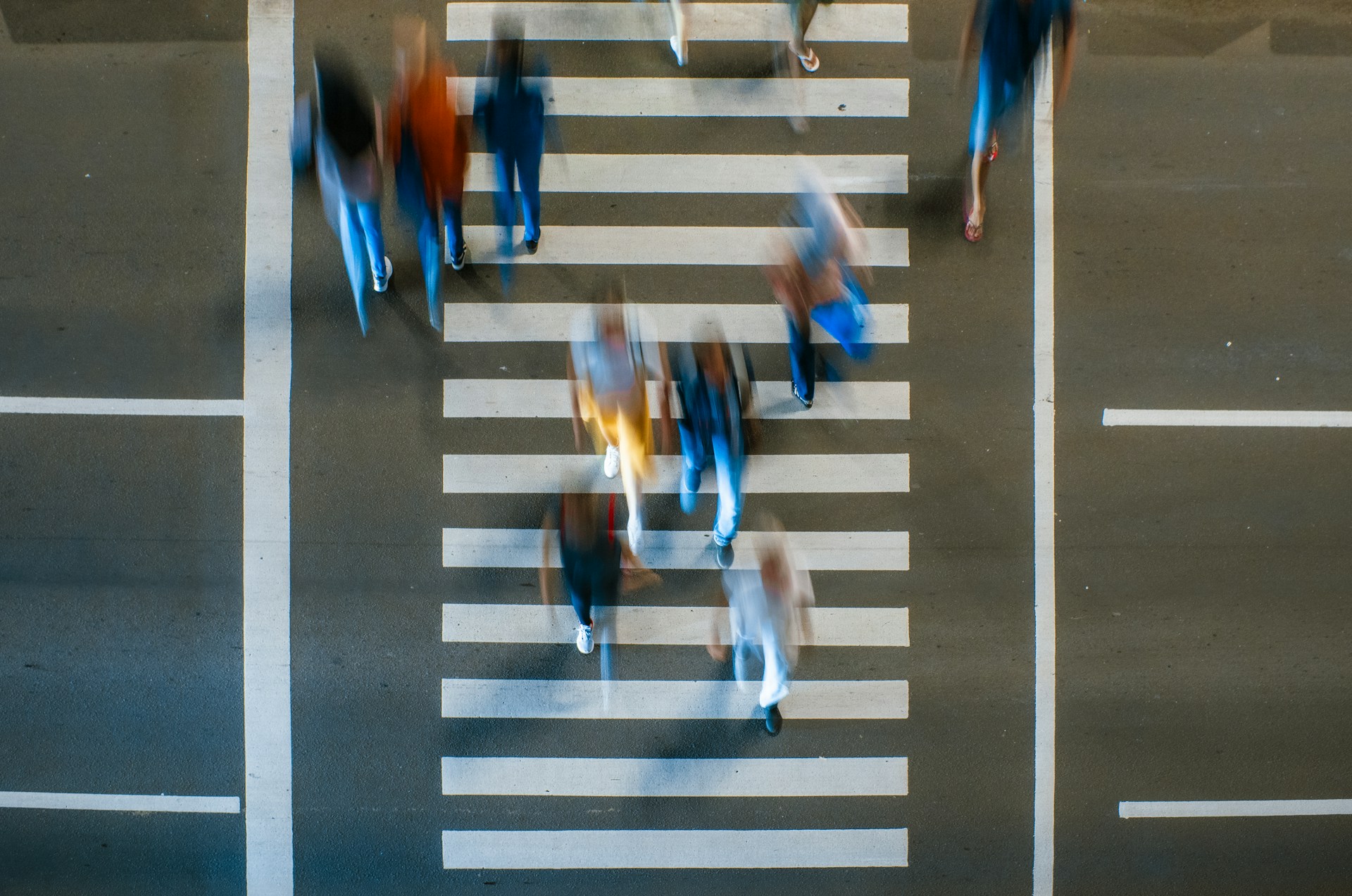
October is Pedestrian Safety Month in Alberta, drawing attention to the risks facing pedestrians throughout the province. As daylight hours shorten, temperatures drop, and road conditions become less predictable, pedestrians and motorists face additional challenges when navigating busy streets.
A recent 24-hour Edmonton traffic enforcement operation highlights the continuing dangers associated with speeding, distracted driving, and other unsafe behaviours. On October 9, 2026, Edmonton Police Service (EPS) officers and City of Edmonton automated enforcement recorded hundreds of traffic violations. Two collisions involving pedestrians also occurred that day.
These incidents raise important questions about pedestrian safety, driver responsibilities, and the legal considerations that arise when someone is injured in a pedestrian accident.
Edmonton Traffic Blitz Reveals Hundreds of Driving Violations
According to an October 16, 2026, Edmonton Journal report, Edmonton police and automated enforcement recorded 634 traffic violations during the October 9 operation. These included speeding, distracted driving, hazardous moving violations, and automated red-light violations.
Police also reported five Criminal Code charges, including impaired driving and disqualified driving. Six vehicles were recorded travelling at least 50 km/h above the posted speed limit. One driver was caught travelling 199 km/h on Anthony Henday Drive and received a mandatory court summons for speeding and careless driving.
The operation coincided with two collisions involving pedestrians. Two collisions involving pedestrians also occurred on October 9, according to the Edmonton Journal. At 23 Avenue and 110 Street, a vehicle driven by a 73-year-old struck another vehicle, which then struck an 85-year-old pedestrian. The man was treated for broken bones. In a second incident at 34 Street and 43 Avenue, a vehicle driven by a 20-year-old man reportedly ran a red light and struck two pedestrians, a 33-year-old woman and a 35-year-old man, who were taken to hospital with serious injuries. EPS also noted that several pedestrians had been seriously injured or killed in recent weeks.
Why October Creates Additional Pedestrian Safety Risks
October introduces several seasonal changes that can affect pedestrian safety across Edmonton, Calgary, Red Deer, and other Alberta communities.
Shorter daylight hours mean more people travel to work, school, and other destinations in darkness or reduced visibility. Rain, frost, early snowfall, and wet leaves can also affect road traction and stopping distances.
Pedestrian activity remains high around schools, public transit stops, shopping centres, and residential neighbourhoods. Halloween introduces additional concerns as children and families travel through neighbourhoods after dark. These circumstances make driver awareness, pedestrian visibility, and compliance with traffic rules particularly important.
Understanding Pedestrian Right-of-Way in Alberta
Alberta’s Traffic Safety Act and associated regulations establish obligations for motorists and pedestrians. Pedestrians generally have the right-of-way at marked and unmarked crosswalks unless traffic controls or a peace officer direct otherwise. An unmarked crosswalk may exist at an intersection even without painted lines or crossing signs.
Drivers must yield to pedestrians who have the right-of-way. However, pedestrians must also obey applicable traffic signals, exercise reasonable care, and yield to vehicles when crossing outside designated crosswalks.
At controlled intersections, pedestrian signals determine when individuals may enter the roadway. Turning motorists also have obligations to yield to pedestrians lawfully crossing. These rules become relevant when determining liability following a pedestrian collision.
How Dangerous Driving Behaviours Contribute to Pedestrian Collisions
Several driving behaviours identified during Edmonton’s enforcement operation can increase pedestrian collision risks.
Speeding reduces the time available for drivers to identify pedestrians and respond to changing conditions. Higher speeds can also increase injury severity. Distracted driving can prevent motorists from noticing pedestrians approaching intersections, entering crosswalks, or walking near traffic.
Failure to obey traffic signals creates additional risks when vehicles enter areas where pedestrians are lawfully crossing. Poor visibility can compound these dangers, particularly when darkness, precipitation, glare, or obstructed sightlines make pedestrians more difficult to detect.
The Serious Consequences of Pedestrian Accidents
Unlike vehicle occupants, pedestrians lack the physical protection of seatbelts, airbags, and a vehicle’s structure. As a result, pedestrian collisions can cause significant injuries, including fractures, traumatic brain injuries, spinal cord injuries, internal injuries, and soft tissue damage.
Some individuals require extensive medical treatment and rehabilitation. Others experience chronic pain, mobility restrictions, psychological difficulties, or reduced independence.
Serious injuries may also affect employment, household responsibilities, and family relationships. In some circumstances, injured pedestrians require ongoing assistance, mobility equipment, or home modifications. The long-term consequences depend on the nature and severity of the injuries and the individual’s recovery.
What Happens When a Pedestrian Is Injured in Alberta?
Alberta’s automobile insurance system includes statutory accident benefits and liability coverage. Depending on the circumstances, injured pedestrians may qualify for certain benefits covering specified medical expenses, rehabilitation costs, and other eligible losses.
For collisions occurring before January 1, 2027, a separate personal injury claim may arise where another party’s negligence contributed to the collision. Determining liability generally involves examining whether a driver breached an applicable duty of care and whether that conduct caused compensable injuries or losses.
Relevant evidence may include police reports, witness statements, photographs, intersection camera footage, vehicle information, and medical records. A traffic ticket does not automatically establish civil liability, while the absence of traffic charges does not necessarily prevent a negligence claim.
Can a Pedestrian Be Partially Responsible for a Collision?
Some pedestrian accident claims involve allegations that more than one party contributed to the collision. For example, questions may arise about whether a pedestrian crossed outside a designated crossing, entered the roadway against a traffic signal, or failed to exercise reasonable care.
Under Alberta’s contributory negligence principles, courts may assess the respective responsibility of different parties. Where contributory negligence is established, damages may be reduced according to the injured person’s assigned percentage of responsibility.
However, a pedestrian’s actions do not automatically eliminate the possibility of compensation. Liability depends on the circumstances, including driver conduct, traffic conditions, visibility, and applicable road rules.
Compensation and Recovery After a Pedestrian Collision
Depending on the circumstances for collisions occurring before January 1, 2027, injured pedestrians may seek compensation for losses resulting from another party’s negligence. Potential damages include pain and suffering, lost income, diminished earning capacity, out-of-pocket expenses, and future care costs.
The availability and amount of compensation depend on factors such as injury severity, documented financial losses, statutory restrictions, and any findings of contributory negligence.
Alberta also imposes limitation periods on civil claims. Although the general limitation period for many personal injury actions is two years, the applicable deadline may vary depending on the circumstances. For individuals experiencing lasting injuries, these legal and insurance considerations may remain relevant long after the initial accident.
Alberta’s Auto Insurance System Is Changing on January 1, 2027
The information above describes how pedestrian injury claims currently work in Alberta for collisions occurring before January 1, 2027. On that date, Alberta is transitioning to a new auto insurance model called Care-First. Under Care-First, injured people will access benefits through their own insurer regardless of who caused the collision, and the right to sue another party will be limited to circumstances set out in the legislation. The government has indicated that at-fault drivers may still face legal action if convicted of serious or criminal driving offences.
Which system applies depends on the date of the collision, so the options available to an injured pedestrian may differ significantly. Anyone injured in a collision should seek legal advice about how these changes may affect their situation.
Pedestrian Safety Remains Important Beyond October
Edmonton’s October traffic enforcement results provide a timely reminder of the dangers associated with speeding, distracted driving, and other unsafe road behaviours.
Although Pedestrian Safety Month draws particular attention to these concerns, pedestrians face collision risks throughout the year. Changing weather, traffic conditions, and visibility all contribute to the circumstances in which accidents occur.
For pedestrians injured in Alberta motor vehicle collisions, understanding the province’s traffic laws, insurance framework, and personal injury claims process can provide important context during recovery.
Injured in a Pedestrian Accident? Contact Cuming & Gillespie LLP
Pedestrian accidents can cause serious injuries, prolonged rehabilitation, lost income, and lasting changes to everyday life. If you or a family member has been struck by a vehicle in Calgary, Edmonton, or elsewhere in Alberta, understanding your legal rights and potential compensation options is an important part of the recovery process.
The highly experienced personal injury lawyers at Cuming & Gillespie LLP represent pedestrians injured in motor vehicle accidents, including collisions involving speeding, distracted driving, unsafe turns, and failures to yield. We assist injured Albertans with insurance disputes, liability assessments, and claims for accident-related damages. To discuss your options, contact us online or call (403) 571-0555 today.