
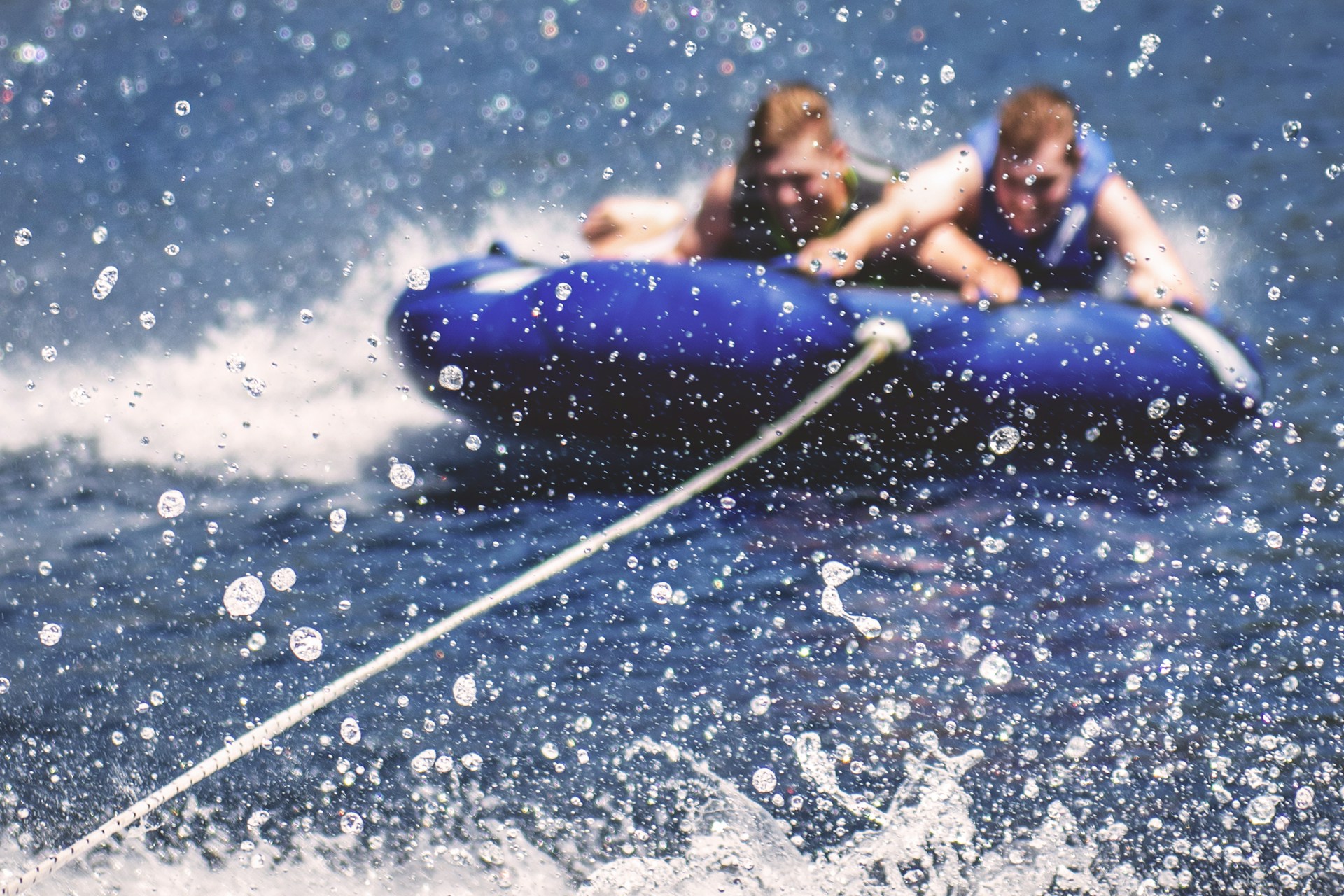
Summer in Alberta brings thousands of outdoor enthusiasts to provincial lakes and waterways. Popular destinations such as Sylvan Lake, Lake Newell, and Pigeon Lake become hubs for recreational boating. Among the most popular activities during these warmer months are towed water sports, which include tubing, wakeboarding, and water skiing. These activities provide high-speed thrills and recreational enjoyment for families and individuals of all skill levels.
While these sports offer significant excitement, they also carry inherent physical dangers. The combination of high velocities, open water, and heavy machinery creates a complex environment where serious accidents can occur in an instant. Participants are often vulnerable to severe impacts, both from hitting the water surface at high speeds and from colliding with vessels, docks, or other recreationists.
Understanding the common causes of these recreational accidents and the medical realities of the resulting injuries is essential for anyone participating in or organizing these activities. When accidents happen, the consequences are often life-altering for the injured party and their family members. Evaluating the factors that lead to these incidents helps highlight the critical importance of safety compliance and legal accountability on the water.
Common Mechanics of Towed Water Sports Accidents
Towed water sports accidents generally stem from a few predictable operational hazards. One of the primary catalysts is operator negligence or inexperience. Operating a motorized vessel while towing a participant requires a high degree of situational awareness, precise speed management, and constant communication. When a driver fails to maintain a proper lookout or operates the vessel at excessive speeds, the person being towed faces immediate danger.
Tow line entanglements and sudden tension releases represent another significant source of injury. Ropes can wrap around limbs or necks, causing severe lacerations, fractures, or amputations when the boat accelerates. Additionally, if a tow line snaps under high tension, the recoiling rope can strike participants or passengers on the boat with tremendous force, leading to catastrophic blunt force trauma.
Collisions stand out as the most hazardous events in water sports recreation. Water skiers and wakeboarders travel at speeds frequently exceeding forty kilometres per hour. At these rates of speed, striking a submerged object, a floating log, a dock, or another vessel results in extreme physical deceleration. In inner tubing, where riders have zero control over their direction or braking, passengers are frequently thrown into each other or ejected directly into solid obstacles.
The Spectrum of Serious Physical Injuries
The physical trauma resulting from water sports mishaps ranges from soft tissue damage to fatal events. Traumatic brain injuries (TBI), including severe concussions, are remarkably common. When a rider falls at high speed, hitting the water can be equivalent to striking a solid concrete surface. This impact can cause the brain to collide with the skull, leading to long-term cognitive impairments, memory loss, and diminished motor function.
Spinal cord injuries represent another devastating outcome of these summer activities. Severe whip action from being thrown off a tube or landing awkwardly from a wakeboard jump can fracture vertebrae or compress the spinal column. These injuries frequently result in permanent partial or total paralysis, requiring lifelong medical care, extensive physical therapy, and costly home modifications to accommodate mobility limitations.
Fractures, dislocations, and severe lacerations are also routinely documented in emergency rooms following lake accidents. The lower extremities of wakeboarders are particularly vulnerable due to the binding mechanisms that attach their feet to the board. If the board catches the water awkwardly during a fall, the twisting forces can cause complex fractures of the tibia and fibula, as well as catastrophic tears to the ligaments in the knee.
The Legal Framework Governing Alberta Waterways
In Alberta, marine safety and liability are governed by a combination of federal and provincial statutory framework standards. The Canada Shipping Act, along with the Small Vessel Regulations and the Vessel Operation Restriction Regulations, establishes the baseline rules for safe boating. Transport Canada requires everyone operating a motorized pleasure craft to carry proof of competency, most commonly a Pleasure Craft Operator Card. Other accepted proof may include proof of passing a boating safety course before April 1, 1999, certain marine certificates, or a completed rental boat safety checklist during the rental period.
These federal laws mandate that any person operating a motorized vessel must possess a valid Pleasure Craft Operator Card and maintain specific safety equipment on board.
A critical legal requirement for any towed water sport is the presence of a dedicated spotter. Under Canadian law, a vessel operator cannot legally tow an individual unless there is a second person on board who is capable of keeping a continuous watch on the person being towed. This spotter must be able to communicate immediately with the driver if the rider falls, signals for help, or encounters an oncoming hazard in the water.
Furthermore, operating a boat while impaired by alcohol, cannabis, or prescription drugs is a serious criminal offence under the Criminal Code of Canada. The province of Alberta enforces these laws strictly on all public bodies of water. Alcohol consumption significantly impairs an operator’s reaction time, peripheral vision, and spatial judgment, directly increasing the likelihood of a catastrophic towing accident.
Establishing Fault and Civil Liability
Determining who is legally responsible for a towed water sports injury involves a thorough assessment of negligence. To succeed in a civil claim, an injured plaintiff must demonstrate that the defendant owed them a duty of care, breached that duty through careless action or inaction, and directly caused the injuries in question. Defendants in these cases can include the boat operator, the owner of the vessel, or even the manufacturer of faulty equipment.
Vessel owners face distinct legal exposure under marine liability principles. In many circumstances, an owner can be held vicariously liable for injuries caused by another person who was operating their boat with consent. This means that if a boat owner permits an untrained or reckless individual to drive their watercraft, the owner may share financial responsibility for any resulting harm inflicted on a towed participant or bystander.
Equipment failures also form the basis for liability in specific scenarios. If a tow rope, life jacket, wakeboard binding, or steering mechanism fails due to a manufacturing defect, the company responsible for designing or producing the item may be held accountable under product liability law. Gathering and preserving physical evidence from the scene, including the vessel and all towing gear, is vital for assessing these technical factors.
Navigating Waivers and the Defence of Volenti
A frequent hurdle in personal injury claims involving recreational sports is the presence of liability waivers or the legal doctrine of voluntary assumption of risk, known legally as volenti non fit injuria. Commercial operators often require participants to sign detailed forms waiving their right to sue in the event of an injury. However, the legal validity of these waivers depends heavily on how they were presented and drafted.
The Court looks closely at whether a waiver was clear, unambiguous, and explicitly brought to the participant’s attention before the activity began. If the language is vague or if the injured party was rushed into signing without an opportunity to read the terms, the document may be deemed unenforceable. Additionally, waivers signed by parents on behalf of minor children face strict legal scrutiny and are frequently set aside by judicial authorities.
Even in non-commercial settings among friends or family where no formal waiver was signed, defendants often argue that the plaintiff knew the risks and chose to participate anyway. While riders do accept the natural, inherent risks of a sport, they do not consent to the negligence of a boat operator. Operating a vessel recklessly, failing to watch for hazards, or driving under the influence fall outside the scope of assumed risks.
Steps to Take Following a Boating Accident
The actions taken immediately following a water sports accident can significantly impact both the health of the injured individual and the viability of any subsequent legal recourse. First and foremost, obtaining professional medical attention is the absolute priority. Some serious injuries, particularly internal bleeding or traumatic brain injuries, may not manifest severe symptoms immediately but require urgent clinical diagnosis.
Securing comprehensive documentation from the scene of the incident is another vital step. If conditions allow, individuals should take detailed photographs of the watercraft, the towing equipment, the surrounding environmental conditions, and any visible physical injuries. Collecting the names, phone numbers, and insurance information of all operators, passengers, and independent eyewitnesses on nearby docks or vessels is equally important.
Reporting the incident to the appropriate authorities is legally required. Serious accidents involving injuries must be reported to local law enforcement, such as the Royal Canadian Mounted Police, or to Transport Canada. These agencies will often conduct an independent investigation and generate an official accident report, which serves as an objective record of the events that transpired.
Injured in a Towed Water Sport Accident? Contact Cuming & Gillespie LLP in Calgary
If you or a loved one has suffered a serious injury during a towed water sports activity anywhere in Alberta, you face a challenging path to recovery. Navigating insurance claims, marine regulations, and medical assessments requires careful attention and structured support. Based in Calgary, Cuming & Gillespie LLP assists injured individuals across the province, including residents in Calgary, Edmonton, Red Deer, Lethbridge, Medicine Hat, Grande Prairie, and Fort McMurray.
Our knowledgeable personal injury lawyers provide comprehensive legal assistance for individuals dealing with the aftermath of boating and recreational accidents on Alberta waterways. Our goal is to help you understand your legal options, manage the administrative burdens of your claim, and seek the financial recovery necessary for your rehabilitation. Contact our office online or call (403) 571-0555 to schedule a consultation regarding your situation.